I labeled this post "From Braais to Bunnies" because these are the two traditions that were completely new to us at the start of the trip but have quickly become two staples of diet. The word braai is Afrikaans for "grilled meat", and it is very similar to a barbecue back in the states. Seemingly every host family wants to meet the rest of the students by inviting us over for a braai, and it has been a great way for us to meet and talk to the locals. Along with steaks, hotdogs, and macaroni and cheese (our group’s personal favorite), which we associate with a normal barbecue, a South African braai also consists of boerewors, which is a South African sausage. Braais happen all over the city and they have quickly become one of our groups most important socializing events.
The other new food is called bunny cho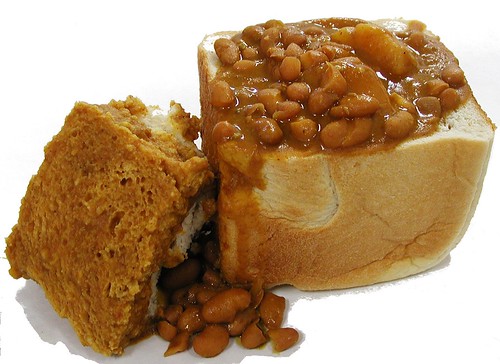
These tastes and aromas, which were once new and unique to us, are just a normal part of the weekend, as people get ready to watch a local a local soccer game or cheer for springbok in the upcoming tri-nations cup. In many ways, our experiences with food document our transition from foreign students living in homestays to actual members of the community. Naturally, we were all hesitant at first, but with a little time and encouragement from the locals, we took that big leap of faith and changed the way we live our lives while in South Africa. We now understand that while these changes may appear scary or even overwhelming, overcoming these types of obstacles are some of the most important and memorable parts of the trip. We have learned a lot about our group, our community, and ourselves by trying new foods, and these experiences ultimately emigrated us into the community in paths only accessible by sharing local experiences with local people.
Thursday, July 14, 2011
From Braais to Bunnies

Tuesday, July 12, 2011
An Introduction to Our Worksites/The Victim Friendly Centre
It's been about a month since we've arrived in Wentworth and it's crazy to think of all that we've observed and accomplished thus far. We've established mutually beneficial relationships with our respective NGOs and are hopefully well on our way to making some kind of a difference in our community. Here's a list of our worksite placements for this summer:
Huayu - St. Monica's Children's Home
Christina - Isiaiah 54 Children's Home
Marcus - We Help Our Children
Snigdha - Victim Friendly Centre
Flannery - South Durban Community Environmental Alliance
Andrew - Beehive Computer Centre
Vinay - South Durban Basin Area Based Management and Izandla Zenkosi Community Development Centre
Kelsey and Evan - Assegai Primary School
I've been working in the Victim Friendly Centre, known around town as the Trauma Room. The Centre is responsible for counseling and providing support for people (mostly women and children) who have been abused. It consists of a small office and some counseling rooms and is staffed by 4-5 women at a time. Although these women don't receive any compensation for their efforts, they have worked tirelessly for about a decade to turn the Centre into what it is today. The women advise a vast range of clients daily, from children who are struggling in school to victims of rape and sexual abuse. The Centre is located within the police station, so officers usually escort anyone who has been traumatized in some way to our office.
The Centre is taking on a new shelter and resource center across the road in order to accommodate more clients. The shelter will house battered women for any number of months. The resource center will be fully staffed and equipped with a boardroom, library, skills development room, and a play therapy room for abused children.
Some general observations:
· The Centre has garnered a lot of support from Wentworth community members in the last few years and has been able to get a significant amount of donations and sponsorships. However, an increased client intake is depleting our resources.
· Many clients are completely unaware of all the resources the Centre has to offer until they come to the police station.
· Drugs play a CENTRAL role in Wentworth and are usually the cause of domestic violence, sexual abuse, low graduation rates, etc.
· Some of the women who volunteer for the Centre have not received official training and just advise the victims based on their personal experiences.
I have personally taken an interest in the children who come through the Centre. I was initially concerned about the lack of resources for children who have been traumatized, so I based my long-term project on play therapy. Sophie, a volunteer from the Netherlands, some local psychology students, and I decided to turn an empty room in the resource center into a “play therapy room” that can be used by the Centre to counsel children.
So far, we’ve painted the room, decorated the walls, and built shelves. We’re now in the process of buying therapy books for children, toys, etc.
Before:

After:


More will be posted soon about other ongoing projects at the Centre!
Saturday, July 2, 2011
Our Adventure in Mnweni
It's unbelievable to think that we have already been here for two weeks. The South Durban Basin is so unique and seems to surprise us with something new everyday. This past weekend, we had the opportunity to explore outside of the SDB community with our visit to Mnweni village near Bergville and the Drakensberg mountains. Our group honestly did not know what to expect with this visit as none of us had been to a traditional Zulu / rural African village before.
After a five hour drive and an intense game of Scrabble (which Jenni skillfully won), we arrived at Mnweni Cultural and Hiking Centre. Upon our arrival we were introduced to Agrippa, one of the main directors of the centre. We immediately settled into our rondavel, which is a variation of a traditional style African hut.
Once we were settled in, we were introduced to our main tour guide for the weekend, Caiphus. He explained to us the history of the area and took us on an adventurous 5k hike to see some of the famous rock art paintings created by some of the early inhabitants of the area. I was amazed by the age of some of these paintings (over 1,000 years old) and impressed by the deep respect that the current habitants have for their ancestors and their work. There are 98 rock art sites in that area alone and the public is only allowed to see 4 of them. The secret sites are used for Zulu traditions and only known to certain people that live in the villages. Some of us also had the opportunity to see Caiphus' home (an even more adventurous 10k)and stay with him for a night. In addition to seeing traditional Zulu dancers, our group enjoyed homemade bread and the scenic views of the mountain range.


A personal highlight for me was the opportunity to interact and play with the children in the village. At Mnweni, our group played soccer, painted, and taught the kids "Duck, Duck, Goose" and "Musical Chairs." The kids learned the games very quickly and it was amazing to see them have so much fun with it. At the end of the day, we passed out soccer jerseys and a variety of other clothes we had brought for the kids.
Another aspect of our visit which particularly touched me were my conversations with the kids and workers at Mnweni. It's pretty amazing when you talk to someone and they have never heard of New York City, San Francisco, Washington D.C., or even America. Being the first person to show these kids the Golden Gate bridge was exciting and let them know a little bit about my own home.
Although I tried to recap as much of our journey to Mnweni as possible, this post doesn't do justice to how moving this experience was. Personally, I was impressed with how well our group communicated despite an obvious language barrier (as the kids knew little to no English and we knew very little Zulu). Despite this we taught games, conveyed our names, and learned about the kids' lives. During our own group reflection we discussed the amount of work that these people do. It is all too easy to dismiss their lives and work as "simple." It seems like "hard work" these days is often defined by how many hours you spend working in front of a computer or the complexity of the material you are reading. I am not alone when I say that I could not herd dozens of sheep, milk cows, hike a 5k to get supplies, and make my own bread by 5 p.m everyday. Clearly, the lives of these people are very difficult.
We wanted to thank the Mnweni centre for such an enriching experience and encourage all of you to go on Facebook and "Like" the Mnweni Cultural and Hiking Centre page.
P.S. Shoutout to Kelsey, Jenni, Evan, Christina, Marcus, Huayu, Flannery and Andrew for the incredible hikes they did


Thursday, June 30, 2011
Sawubona!
Here is a brief recap of what we did in our first week.
1. Merebank Market: According to our host/tour guide Praveen, during apartheid fruit and vegetables were traded from the back of peoples’ cars. After the liberation, structures for these markets were built, and some stands have been up for almost fifty years. We bought South African yams/turnip-type vegetables, peanuts, samosas, and much more. I shouldn't have had breakfast.

2. Engen - Community Liaison Forum (CLF): Durban has three big oil refineries: Mondi, SAPREF, and Engen. Though these giant businesses contribute billions of South African rand to the Durban economy every year they are situated among residential houses. To maintain a harmonious co-existence, each refinery holds Community Liaison Forum meetings to discuss environmental and community issues. We were lucky to have the opportunity to sit in on one such meeting at Engen. It was interesting to watch the exchanges between different NGOs and with the managers of Engen. By the end, it was hard to tell what had really been accomplished. In theory, industry working with community leaders is great, but as with any kind of interaction involving potential funding, it is hard sometimes for people to say what they really want.
 All in all, I would say that we each have already had some exciting and eye-opening experiences. Some of us were surprised by the many similarities between Durban and home. Our cultures share many of the same hobbies (music, facebook, and games) and many of the same problems (drugs, crime, and poverty...though to varying degrees). Some of us listened to the shocking perceptions people in South Africa have about America. While we were shocked to find so many similarities, they were shocked to find that not all Americans drive Bugattis, or see celebrities on the streets. It will be interesting to see what other cultural stereotypes get debunked in the next eight weeks.
Sunday, June 19, 2011
This one is for the parents
Saturday, May 21, 2011
Group Goals - A list in progress
- Set up Wentworth, SA Wikipedia page
- Distribute books to local village
- Help each other create and accomplish personal goals